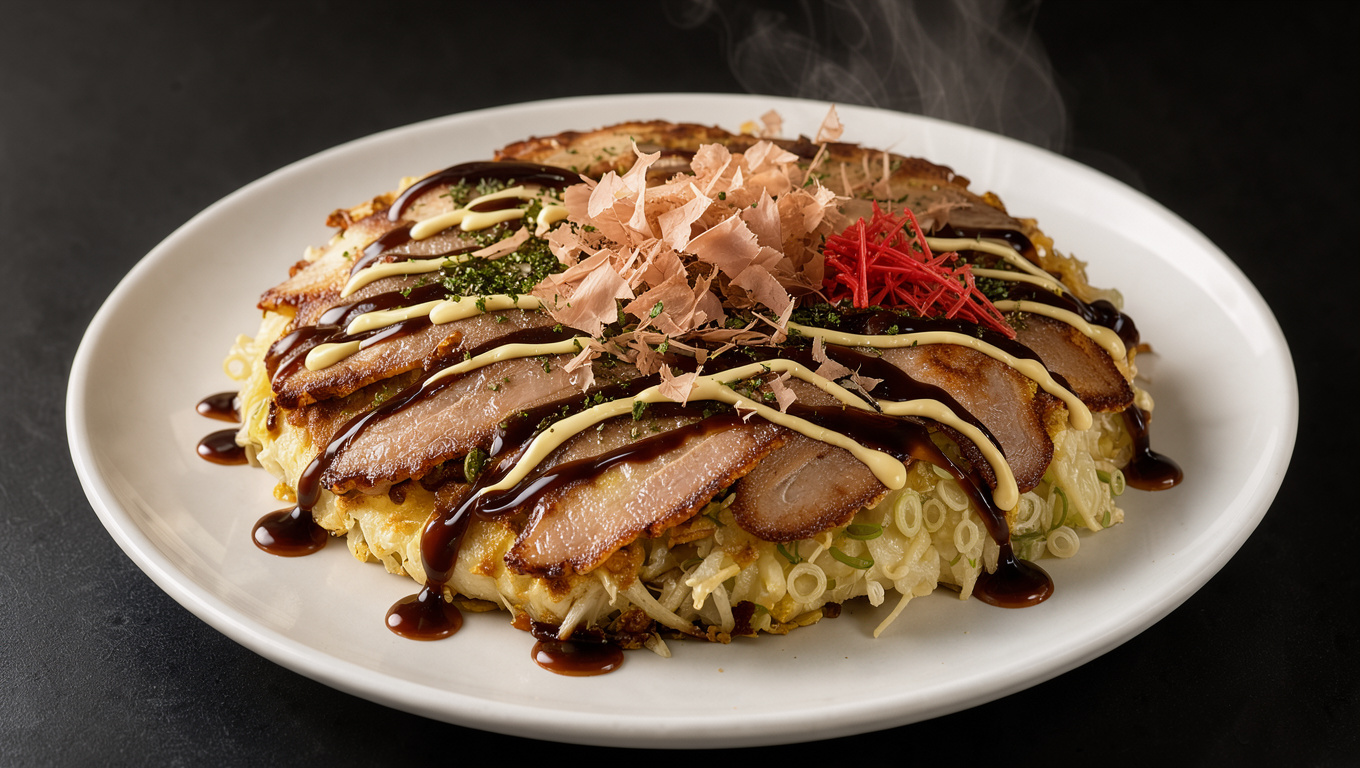
Osaka-Style Okonomiyaki
A thick, cabbage-packed savoury pancake, griddled until the edges crisp and the middle stays custardy. Osaka street food at home: bonito flakes dancing on top, mayonnaise and fruity brown sauce criss-crossed over the lot.
- Total
- 45 min
- Heat
- 1/5
- Serves
- 4
Sign in to see what you already have, what you can swap and what’s missing.
Flavour profile
- Funky
- Savoury
- Sweet
- Umami
The real deal
- Region
- Osaka, where okonomiyaki is cooked thick, mixed through, and griddled rather than layered (that's Hiroshima).
- Technique
- The batter is barely more than flour, dashi, grated yam and egg — the cabbage is the bulk, folded in and cooked low and slow so the steam sets the centre.
- We kept
- Nagaimo and dashi in the batter, a mountain of cabbage, pork belly laid over the top, and the full Osaka finish: aonori, katsuobushi and the mayonnaise-sauce cross-hatch.
Ingredients
batter
- 140 g
- 240 ml · or dashi made from granules
- 100 g · optional · grated to a paste; the classic fluff-maker
- 2
- 600 g · very finely shredded
- 4 · finely sliced
- 30 g · optional · tempura scraps, for crunch
Topping
- 120 g · a quarter of the slices
griddle
- 2 tbsp
finish
- 80 ml
- 60 ml
- 2 tsp · optional
- 15 g
- 30 g · optional
Method
Make 240 ml — steep kombu and bonito flakes, or stir dashi granules into hot water — and let it cool to room temperature. Hot dashi will cook the flour into lumps. Peel and grate 100 g on the finest holes of a box grater until you have a sticky, gluey paste — it should cling to the back of a spoon. This is what keeps the pancake custardy inside.
Tip: If you can't find nagaimo, use a tablespoon of potato starch and add an extra egg; the texture will be a little less pillowy but it will hold.
Shred 600 g as finely as you can with a knife or mandoline — aim for threads, not chunks. Toss with a big pinch of salt and set aside. Finely slice 4 .
Tip: Thick shreds won't cook through in the middle; this is the one step where a shortcut ruins the pancake.
Whisk 140 g with the cooled cool dashi and 2 until just combined — lumps are fine; overworking makes the pancake tough. Fold in the grated yam paste. The batter should be thin enough to ribbon off the whisk. Add the shredded cabbage, the sliced , and 30 g if using. Fold gently until everything is barely coated — you want a loose, shaggy pile, not a smooth batter.
Tip: Resist the urge to stir hard. The cabbage should still look like cabbage, only barely held together.
Heat a flat griddle or large heavy frying pan over medium heat for a few minutes, then film it with 2 tbsp . Test with a drop of batter: it should sizzle gently, not snap.
Tip: Medium heat, not high. Okonomiyaki are thick and need the middle to steam-cook before the outside burns.
Ladle a quarter of the mix onto the griddle and shape it into a thick round about 2 cm high — don't press it down. Lay a quarter of the 120 g over the top, cover with a lid or foil, and cook for 5 min. The underside should be deep golden and the top starting to look set.
Tip: If it smells like it's catching, slide the pancake onto a spare plate, wipe the pan, and lower the heat before continuing.
Flip the pancake with two spatulas, pork side down, and press gently with the back of a spatula to help it set. Cover and cook for another 4 min, until the pork is browned and crisp and a skewer pushed into the centre comes out clean. Slide the finished pancake onto a plate and repeat with the remaining mix and pork — you should get four in total. Keep the cooked ones warm under foil while you finish the rest.
Brush or squeeze 80 ml generously over the top of each hot pancake in zigzags — it should melt and gloss against the heat.
Zigzag 60 ml over the sauce in the other direction, then scatter 2 tsp , a heap of and a pinch of if you like. Serve immediately, while the bonito flakes are still waving in the heat.
Tip: Eat straight from the plate with a spatula, not a knife and fork — and don't cut it too small or the middle goes cold fast.
Make it a meal
What hits hardest next to it.
- SaladSourFreshCrunchy
Cuts the rich, sweet-savoury sauce and resets the palate between bites.
Try: Shaved cabbage with rice vinegar, sesame and a pinch of sugar
From our kitchen
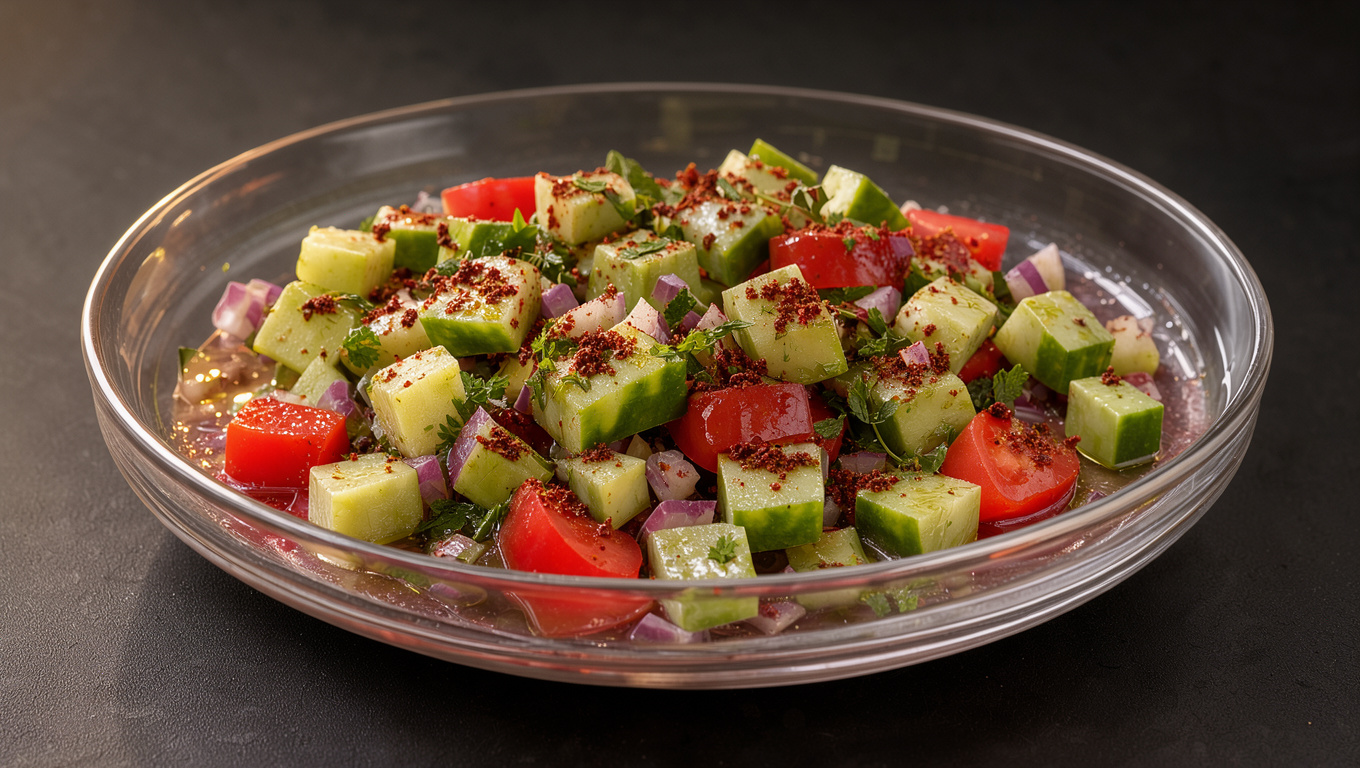 Shirazi SaladTURKISH · TURKEY — 20 MIN
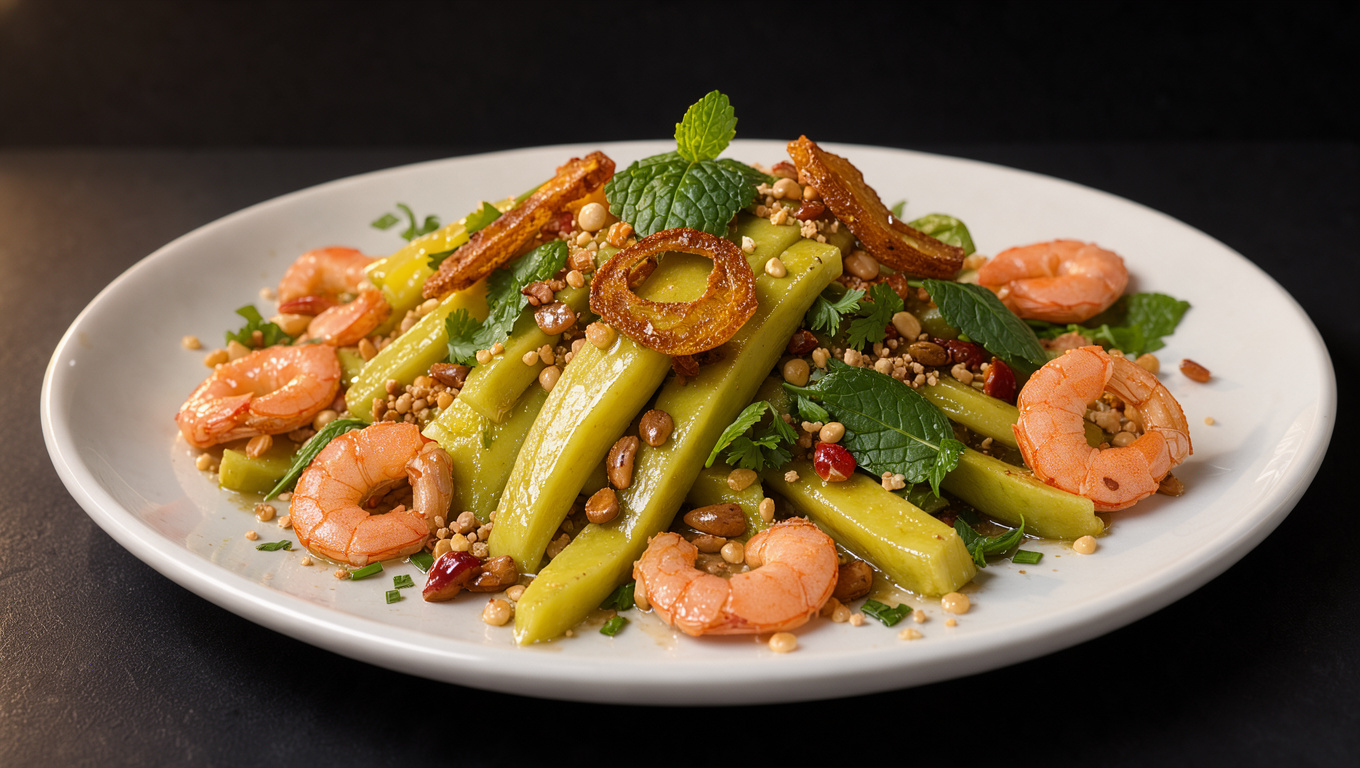 Vietnamese Green Mango Salad with Dried ShrimpVIETNAMESE · VIETNAM — 30 MIN
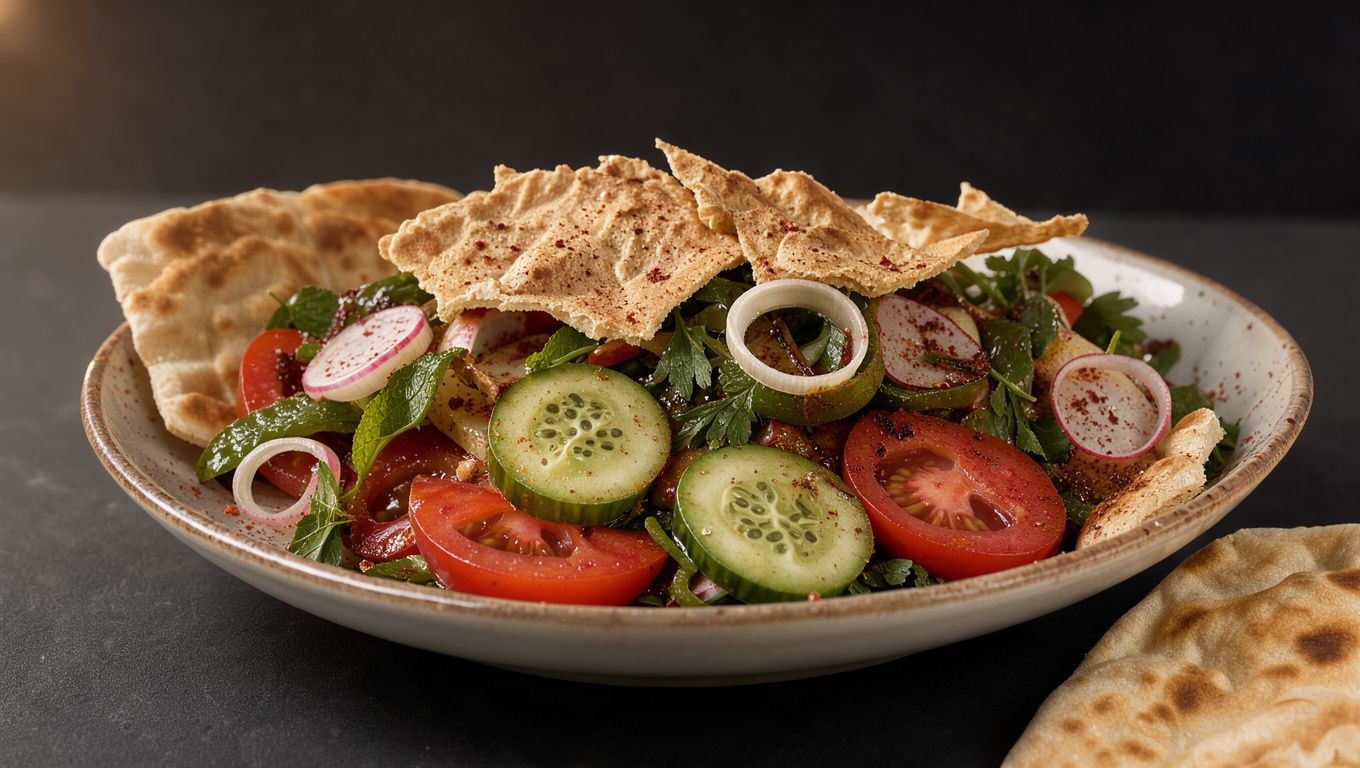 Lebanese Fattoush with SumacINDIAN · INDIA — 30 MIN
- SoupLight
A clean broth keeps the meal from being all batter and sauce.
Try: Clear dashi with wakame and thin tofu
From our kitchen
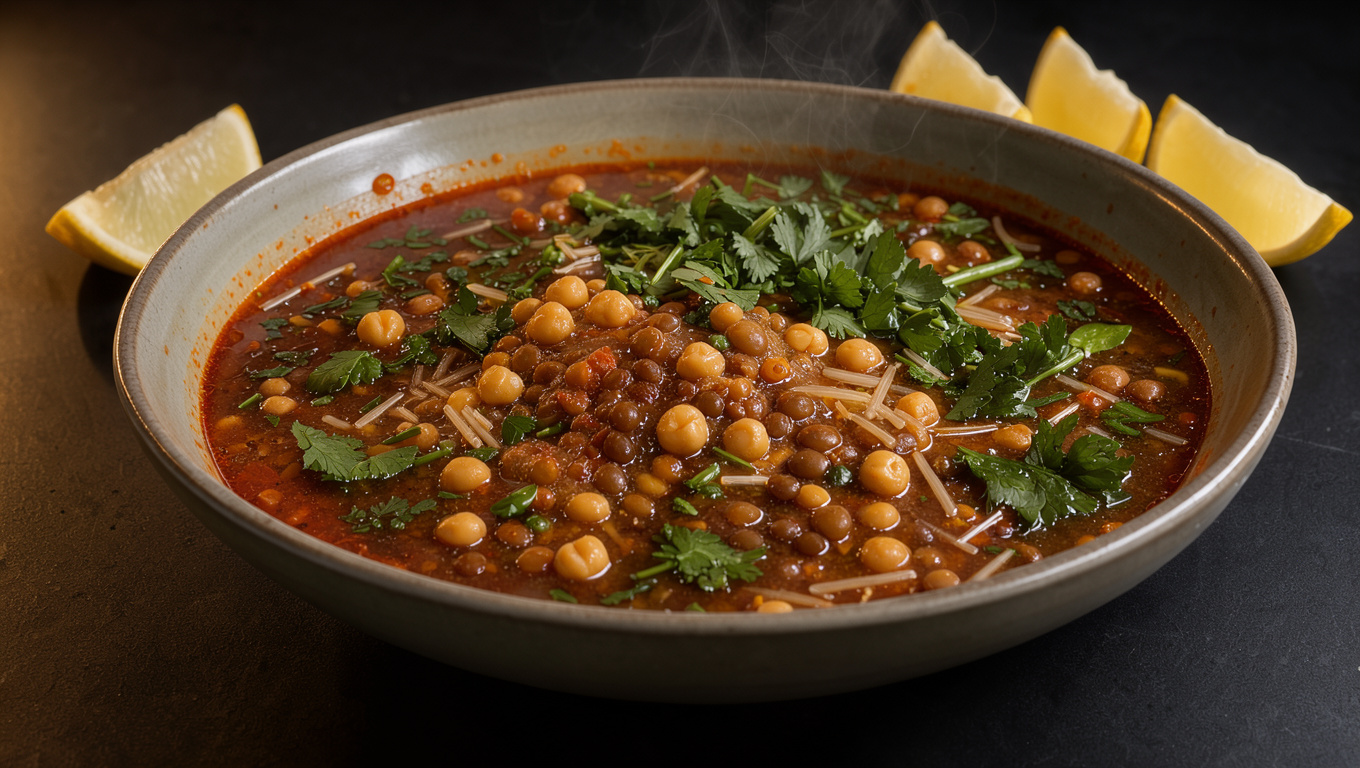 Moroccan HariraLEBANESE · LEBANON — 80 MIN
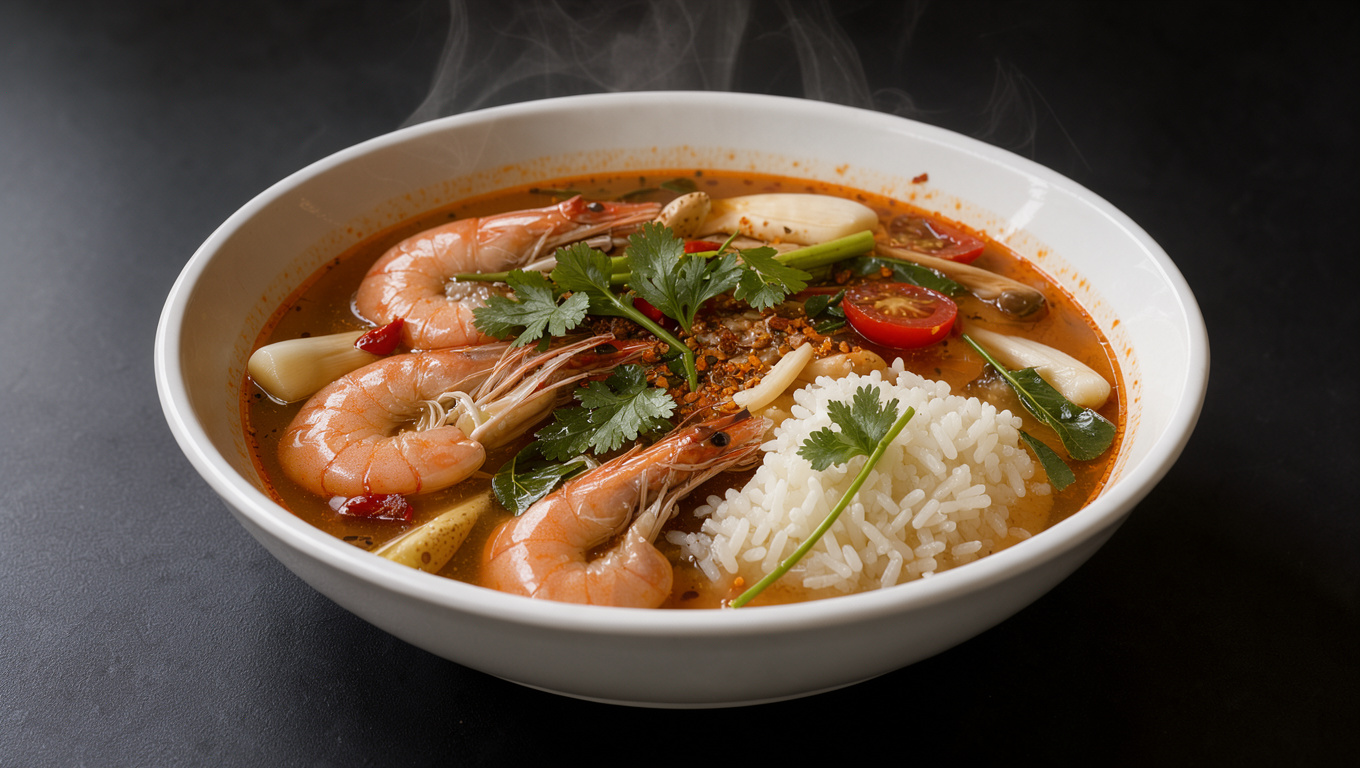 Tom Yum GoongTHAI · THAILAND — 40 MIN
- DrinkLightBitter
Cold beer and griddled okonomiyaki are the standard Osaka match.
Try: Ice-cold lager
Nothing on the site fits yet. Ask the Lab to cook one up →