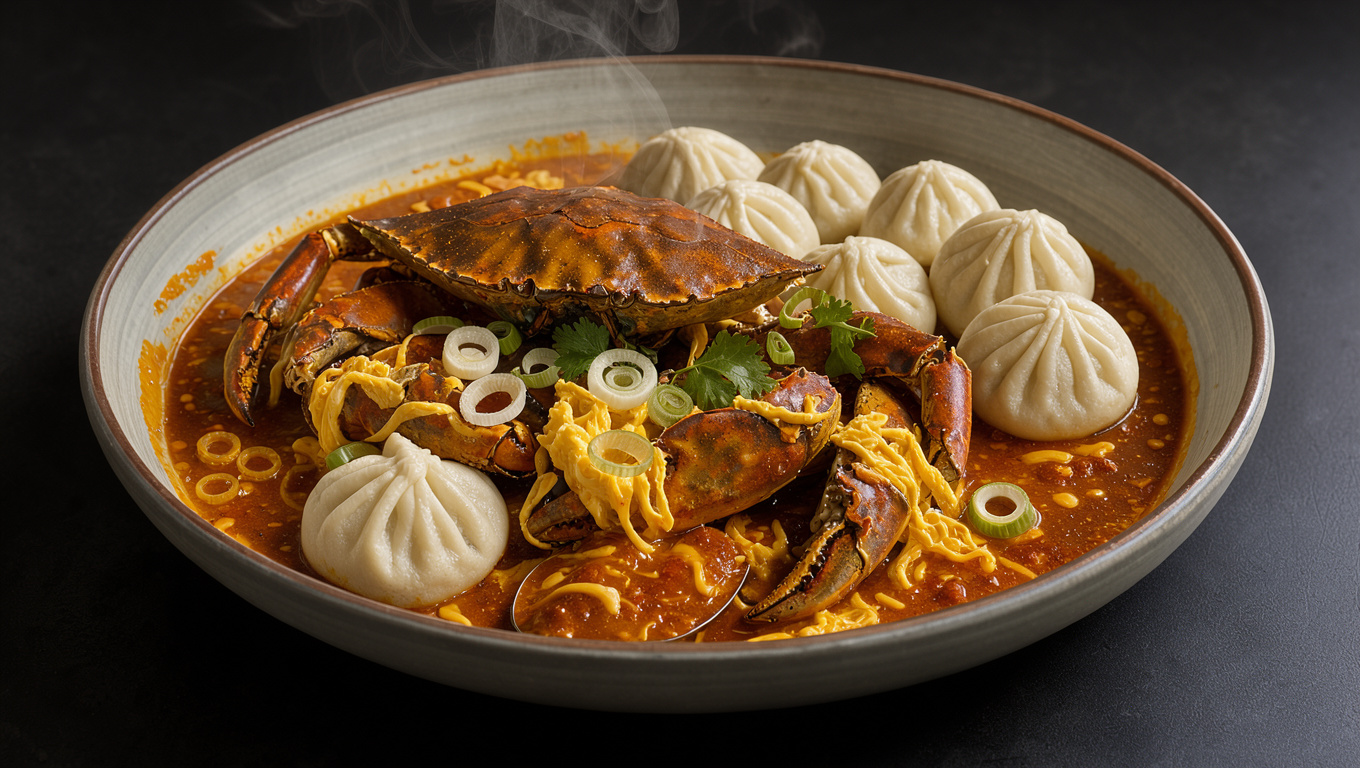
Singapore Chilli Crab
A whole mud crab drowning in a glossy, egg-ribboned chilli-tomato gravy that is somehow sweet, sour, fiery and savoury all at once. Get the claws, a pile of mantou buns and no dignity whatsoever — this is eaten with your hands.
- Total
- 50 min
- Heat
- 4/5
- Serves
- 2
Sign in to see what you already have, what you can swap and what’s missing.
Flavour profile
- Garlicky
- Savoury
- Spicy
- Sweet Sour
The real deal
- Region
- Singapore, born in the 1950s from a Hainanese cook's decision to add tomato and chilli to a steamed crab — part of both Singaporean and Malaysian food culture.
- Technique
- Crab pieces flash-fried in hot oil, then simmered in a chilli-tomato gravy that is finally enriched with beaten egg poured in in a thin stream to form silky ribbons.
- We kept
- Fresh raw mud crab, a real rempah pounded from shallots, garlic, ginger and fresh red chillies, tamarind for sourness, egg ribbons, and mantou buns to mop the gravy — nothing about the dish was toned down.
Ingredients
crab
- 1.2 kg · live, then cleaned and cut into pieces, claws cracked
- 4 tbsp
rempah
- 8 · roughly chopped
- 6 cloves · peeled
- 4 cm · peeled and sliced
- 6 · deseeded, roughly chopped
- 4 · left whole
- 1 tsp · optional · wrapped in foil and toasted, then crumbled
Sauce
- 3 · roughly chopped
- 5 tbsp
- 3 tbsp
- 2 tbsp
- 2 tbsp
- 1 tsp
- 250 ml
finish
- 2 · beaten
- 3 · sliced on the diagonal
- 1 bunch · optional · leaves picked
serve
- 10 · steamed
Method
If your crab is live, chill it in the freezer for 20 min to quiet it, then dispatch it. Pull off the top shell whole and set it aside — it is the crown of the dish. Scrub the body under cold water, pull out and discard the grey feathery gills and the small sac behind the eyes, then cut the body into quarters through the legs and crack each claw and knuckle firmly with the back of a cleaver so the gravy can get in. Pat everything dry — wet crab will spit and stew instead of sear.
Tip: Ask your fishmonger to clean and crack it for you; a live crab is best cooked within an hour of cleaning.
Pound the , , , and in a mortar to a coarse, wet, fragrant paste — you want texture, not a purée. If you use a blender, add a splash of oil and pulse in short bursts. Crumble in the toasted if using and stir it through. This rempah is the spine of the dish; it should sting the back of your nose when you smell it.
Tip: A blender overworks the shallots and makes the paste bitter; a mortar keeps it sweet.
Whisk the , , , and with the 250 ml until smooth, then stir in the chopped . Taste it: it should hit sour and sweet in equal measure with a chilli hum behind. Adjust with a little more tamarind for sourness or sugar for balance.
Tip: Tamarind pastes vary wildly in acidity — always taste the sauce, not the recipe.
Slice the on a long diagonal and pick the leaves. Set both aside for the finish.
Heat a wok over high heat until it just starts to smoke, add the 4 tbsp and swirl. Add the crab pieces in one layer — work in batches if your wok is crowded — and fry hard for 3 min, tossing, until the shells turn bright orange-red and the exposed flesh goes opaque. Pull the crab out and set it aside; leave the oil in the wok.
Tip: Sear, don't steam: a crowded wok drops the temperature and the crab releases water instead of caramelising.
Lower to medium heat, add the rempah and fry for 5 min, stirring constantly, until the raw smell of shallot and belacan cooks off and the oil separates and pools at the edges of the paste. It will darken to a deep brick red and smell roasted and sweet. This step cannot be rushed — undercooked rempah tastes raw and harsh.
Tip: If the paste starts to catch, add a spoonful of water and keep stirring; burnt rempah ruins the whole dish.
Return the crab to the wok and toss to coat every piece in the rempah. Pour in sauce and bring to a lively simmer, scraping up anything stuck to the wok. Lay the reserved top shell on top, cover and cook for 7 min, turning the pieces once, until the claws are opaque to the bone and the gravy has thickened and darkened.
Tip: The shell on top steams the crab gently while its juices drip down into the gravy.
Uncover, take the wok off the heat and, stirring the gravy in wide slow circles, pour in the beaten in a thin steady stream. Keep stirring gently for 20 sec so the egg sets into silky ribbons suspended in the sauce, not scrambled lumps. The gravy should now be glossy, orange-red and thick enough to coat the back of a spoon.
Tip: Off the heat and stirring constantly: egg dropped into a rolling boil becomes rubber.
Tip the crab and every drop of gravy into a wide bowl and scatter over the and . Serve immediately with steamed buns for mopping, a bowl of warm water and lime for your fingers, and no forks.
Tip: The gravy is the point — serve the crab sitting in it, not drained, and give everyone a spoon for the shell cavities.
Make it a meal
What hits hardest next to it.
- BreadStarchyLight
Soft, pillowy buns are the traditional mop for every drop of that egg-thickened chilli gravy.
Try: Steamed or deep-fried mantou buns
Nothing on the site fits yet. Ask the Lab to cook one up →
- SideCrunchyCoolingSour
A cold, sharp pickle cuts the rich, sweet-spicy gravy and gives your palate a breather between claws.
Try: Crunchy cucumber and pineapple in rice vinegar with a pinch of sugar
From our kitchen
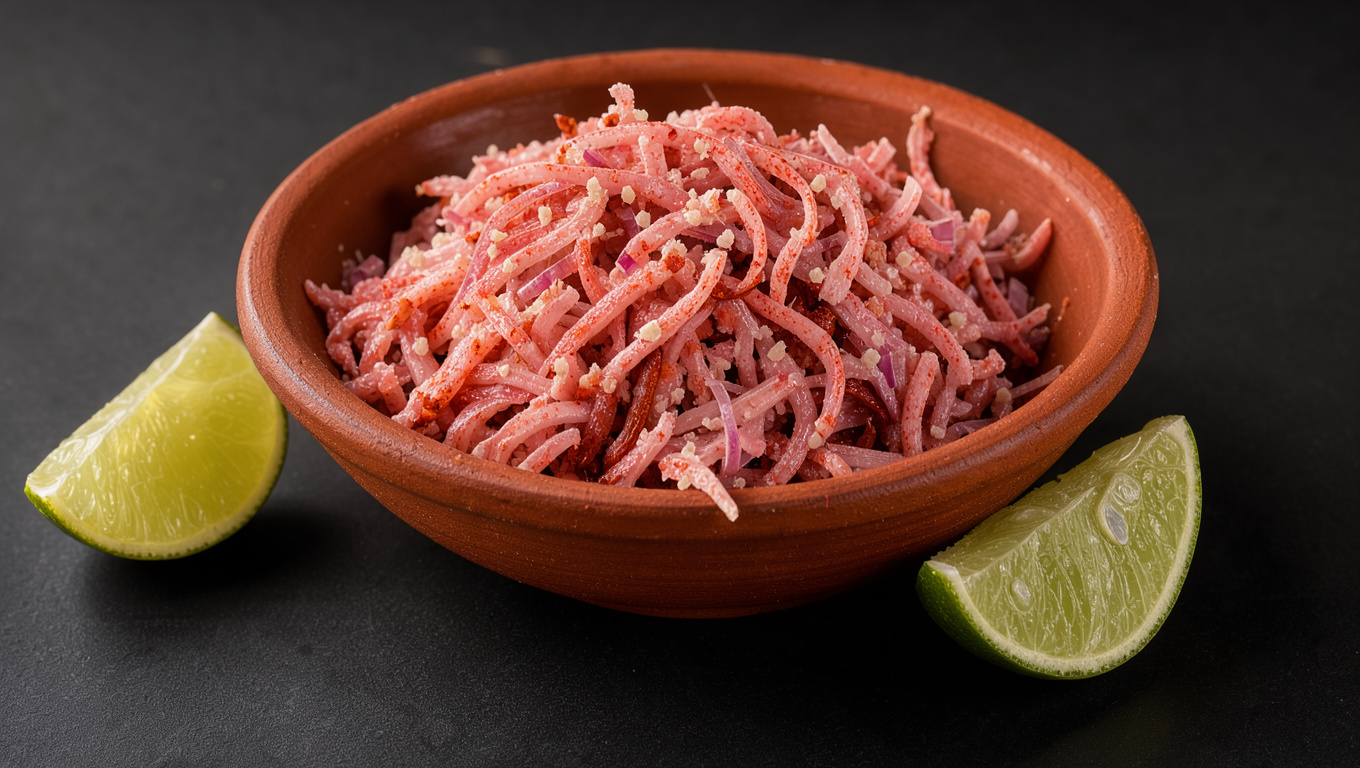 Pol Sambol (Sri Lankan Coconut Sambol)SRI LANKAN · SRI LANKA — 15 MIN
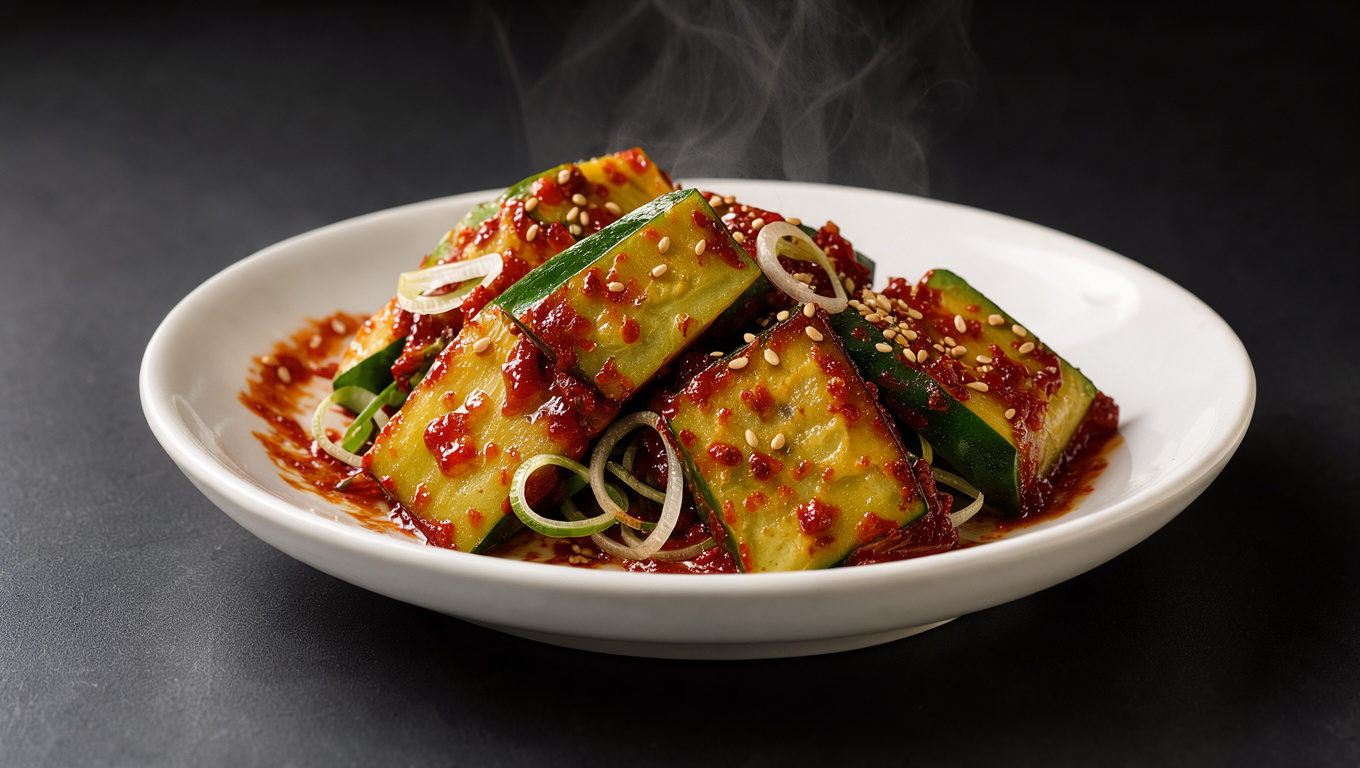 Oi Muchim (Korean Cucumber Kimchi)KOREAN · KOREA — 15 MIN
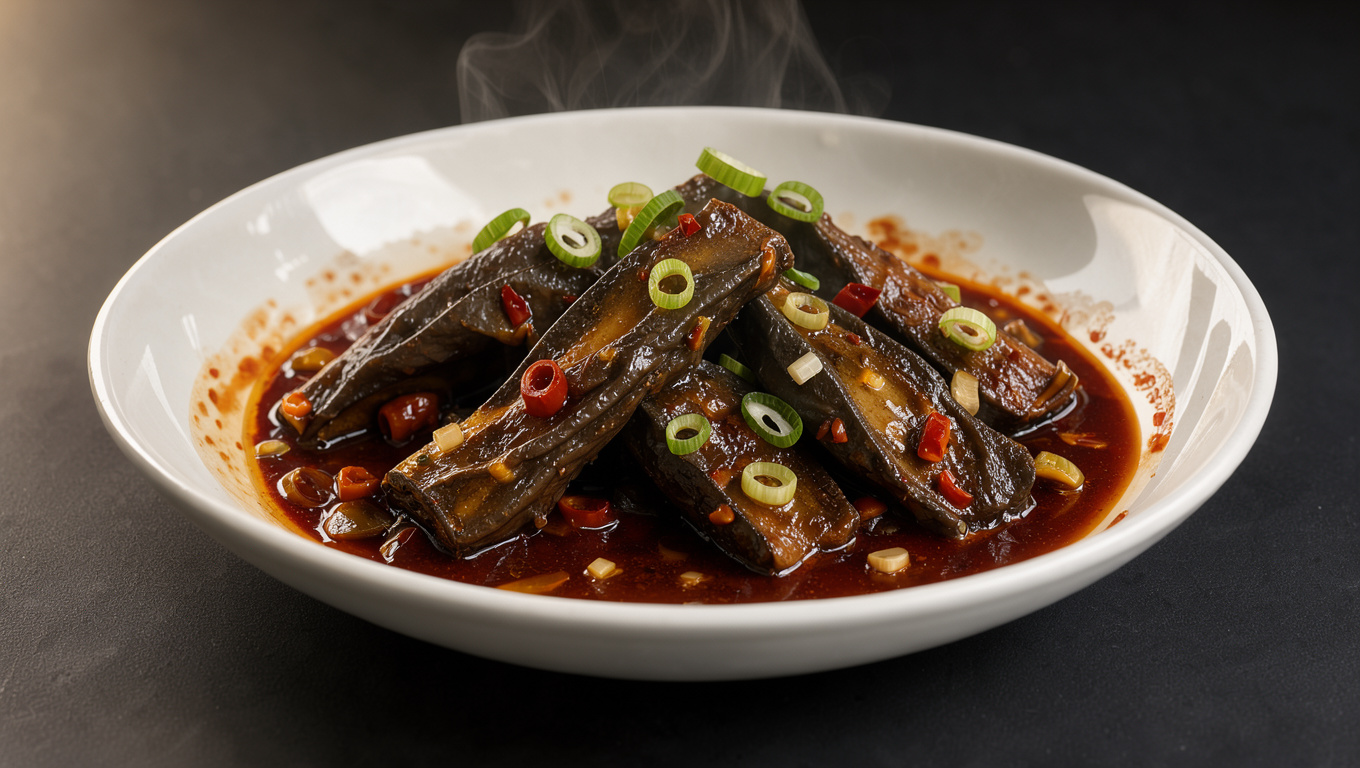 Sichuan Fish-Fragrant AubergineSICHUAN · CHINA — 40 MIN