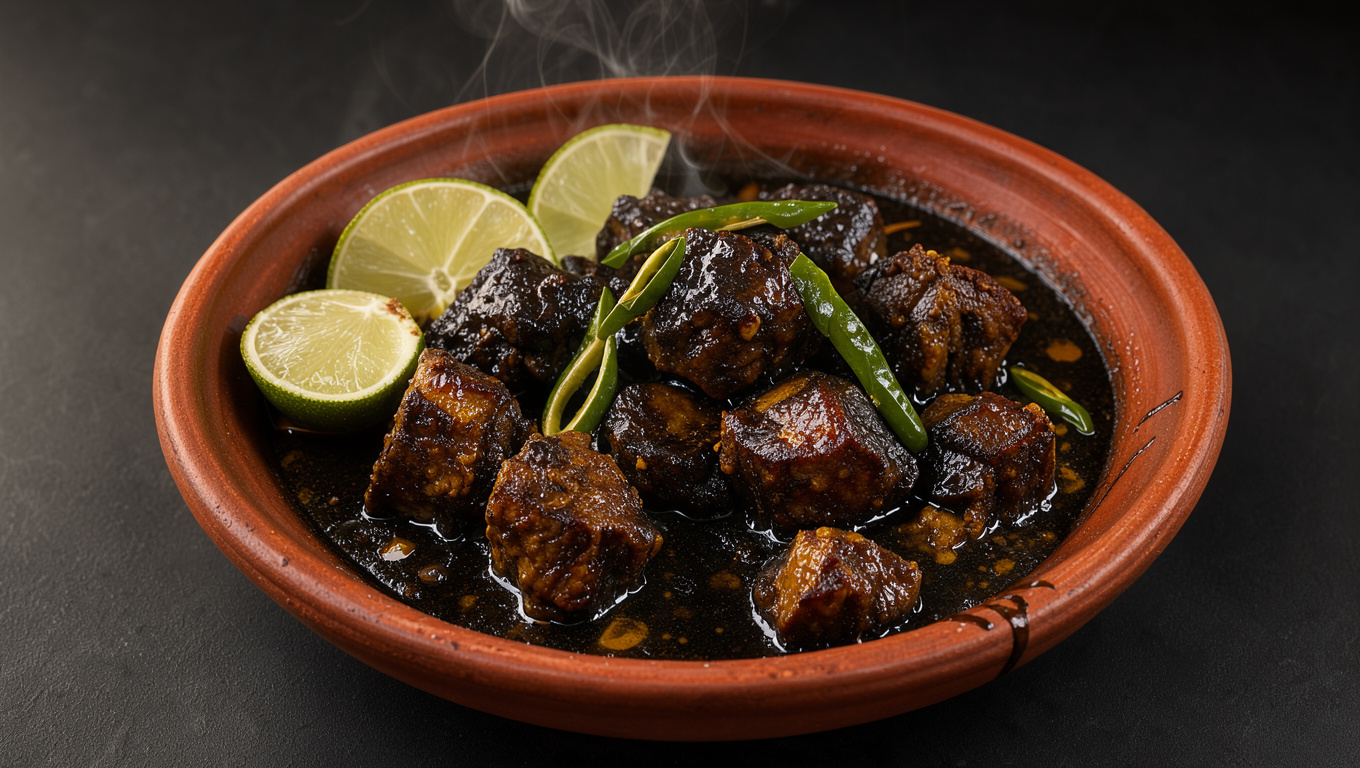
Sri Lankan Black Pork Curry
Pork belly braised until it turns the colour of teak, dark with roasted curry powder, black pepper and goraka. Sour, peppery and deeply savoury — the curry that stains the rice black.
- Total
- 115 min
- Heat
- 3/5
- Serves
- 4
Sign in to see what you already have, what you can swap and what’s missing.
Flavour profile
- Peppery
- Rich
- Smoky
- Sour
The real deal
- Region
- Sri Lanka — the dark, roasted-spice pork curry of the Sinhalese low country and the Burgher kitchens.
- Technique
- Roasted curry powder and goraka are bloomed in hot oil with onion, garlic and ginger, then the pork braises slowly until the masala is almost dry and lacquer-black.
- We kept
- Goraka for sourness (never vinegar), pandan, curry leaf and cinnamon, and the long slow braise that blackens the sauce; no coconut milk.
Ingredients
curry
- 900 g · boneless, skin on if you can get it
- 3 · finely sliced
- 6 cloves · crushed
- 4 cm · grated
- 20
- 2 · knotted
- 1
- 2 · bruised
- 3 tbsp
- 2 tsp · freshly cracked
- 1 tsp
- 4
- ½ tsp
- 2 tsp · crushed
- 4
- 3 · bruised
- 1½ tsp
- 1 tsp · grated
- 3 tbsp
- 1 tsp
finish
- 2 · optional · slit
- 1 · optional · cut into wedges
Method
Cut into 4 cm cubes, leaving the rind on if it has any, and pat them very dry. Dry meat browns; wet meat steams.
Tip: Pork belly gives the classic unctuous result. Shoulder works too but the sauce stays thinner.
Put , and in a dry pan over medium heat and toast, shaking, until the fennel smells toasty and the cloves darken a shade. Tip into a bowl to cool. Grind the toasted spices to a fine powder in a spice grinder or pestle and mortar. Keep it separate — it goes in later than the curry powder so it stays aromatic.
Tip: This is what makes the curry black: roasted, not raw, spice. Stop at dark brown — grey-black ash tastes like an ashtray.
Slice finely, crush and grate into a rough paste. Bruise with the back of a knife and knot so it stays in one piece.
Tip: Use a shallot, not a brown onion: sweeter, less watery, and it melts into the masala instead of sitting in it.
Heat 3 tbsp in a heavy pot over medium heat. Add , and the bruised lemongrass and pandan. Let them crackle for 30 sec, then add the shallot, garlic and ginger. Fry gently until soft and pale gold, about 8 min — do not rush this.
Tip: Curry leaves must hit hot oil, never water. If they do not hiss when they land, the oil is not hot enough.
Add , , , and the ground spice blend to the pot. Fry over low heat, stirring constantly, for 2 min. The masala should darken to the colour of coffee and smell roasted, not raw.
Tip: Low heat, constant stirring. Chilli powder scorches in seconds and turns the whole pot bitter.
Turn the heat up, add the pork and toss to coat every cube in the masala. Fry for 5 min, turning, until the meat is browned at the edges and the whole pot is slick and dark.
Tip: The masala sticks to the pork; that coating is the black crust on each piece at the end.
Add , 1½ tsp , and just enough water to barely cover the meat. Bring to a simmer, clamp the lid on and cook over low heat for 1 h 5 min, until the pork is completely tender and a cube squashes under a spoon.
Tip: Goraka is the sourness — the same fruit as Malabar tamarind. Too much and it turns astringent; taste at the halfway point before adding more.
Take the lid off, fish out the cinnamon, pandan and lemongrass, and cook over high heat for 10 min, until the sauce thickens into a dark, glossy masala that clings to the pork and the oil begins to separate at the edges.
Tip: You want the gravy almost dry, lacquered onto the meat — watery black curry is not finished.
Off the heat, stir in 1 tsp to sharpen it, then taste: it should be sour, peppery and deeply savoury. Scatter over if you want more heat and serve with lime wedges on the side.
Tip: This curry is better the next day. Cool it fast, fridge it, and reheat gently with a spoonful of water.
Make it a meal
What hits hardest next to it.
- Rice & noodlesStarchyLightCooling
Plain rice soaks up the dark, sharp sauce and cools the pepper heat.
Try: Steamed Sri Lankan red rice or basmati
From our kitchen
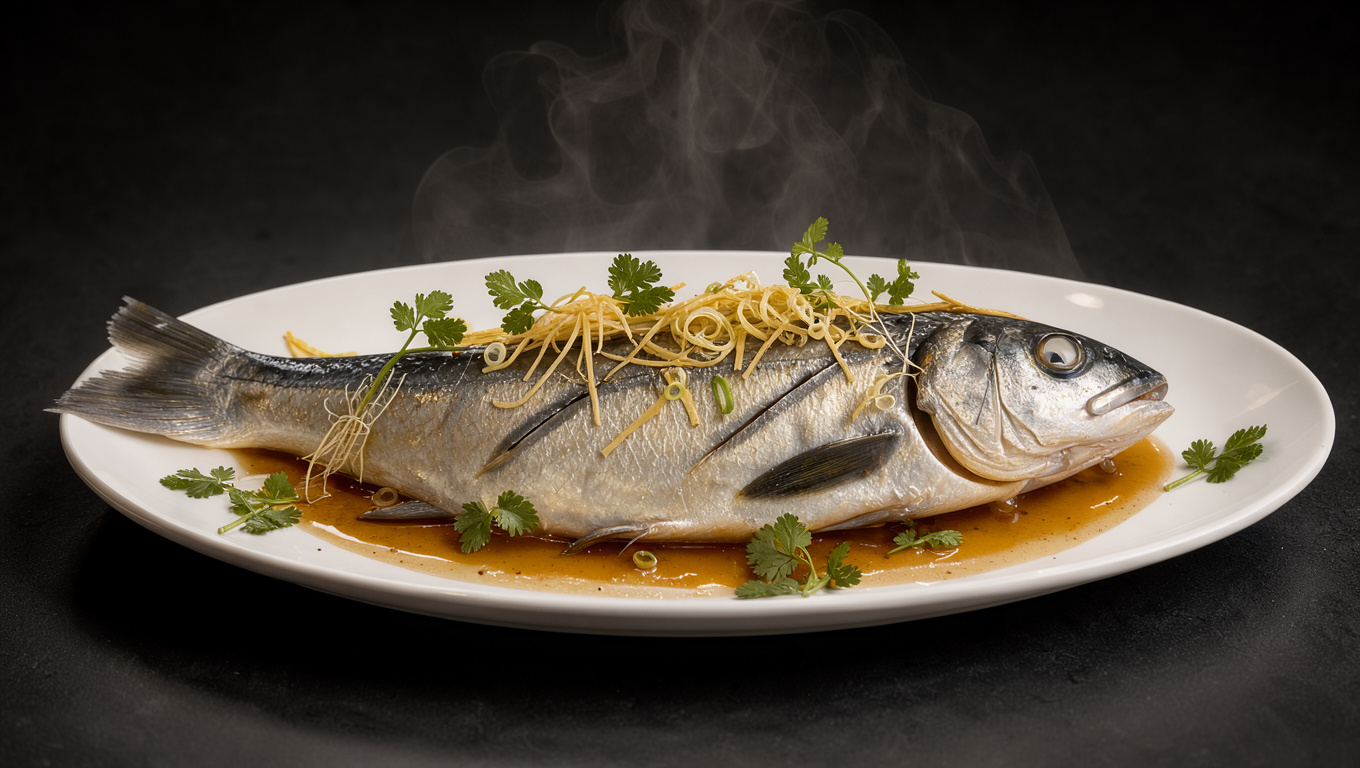 Cantonese Steamed Fish with Ginger and Spring OnionCANTONESE · CHINA — 35 MIN
- SideSourCrunchyFresh
A raw, tart salad cuts the richness of pork belly between mouthfuls.
Try: Shaved cucumber and red onion with lime and chilli flakes
From our kitchen
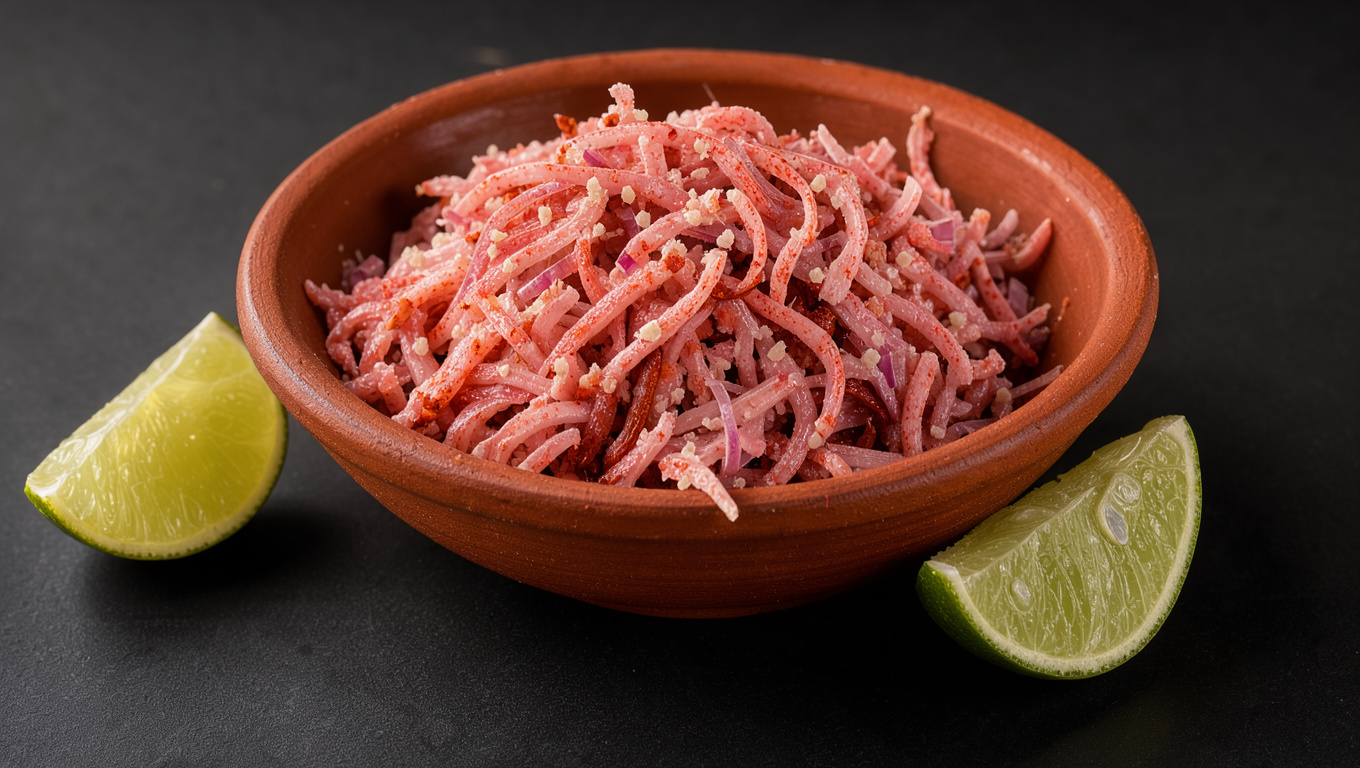 Pol Sambol (Sri Lankan Coconut Sambol)SRI LANKAN · SRI LANKA — 15 MIN
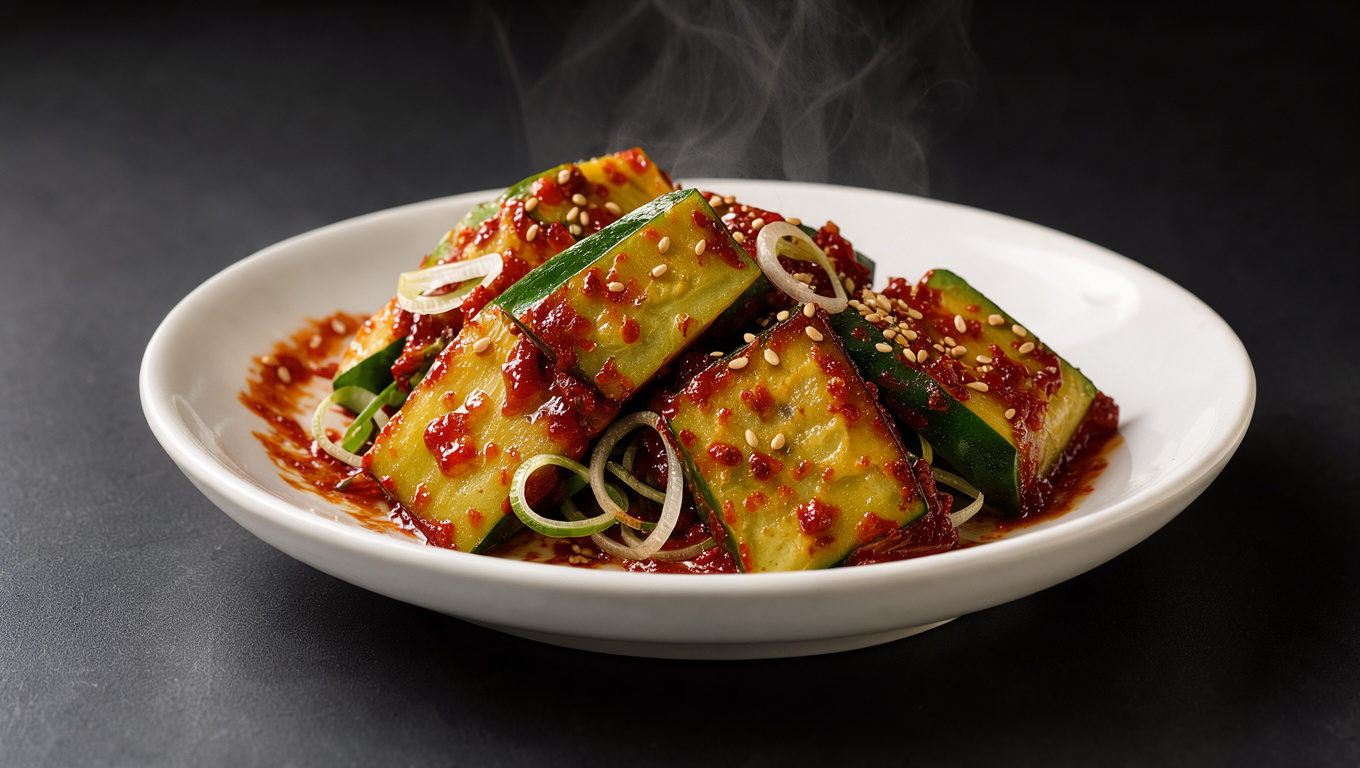 Oi Muchim (Korean Cucumber Kimchi)KOREAN · KOREA — 15 MIN
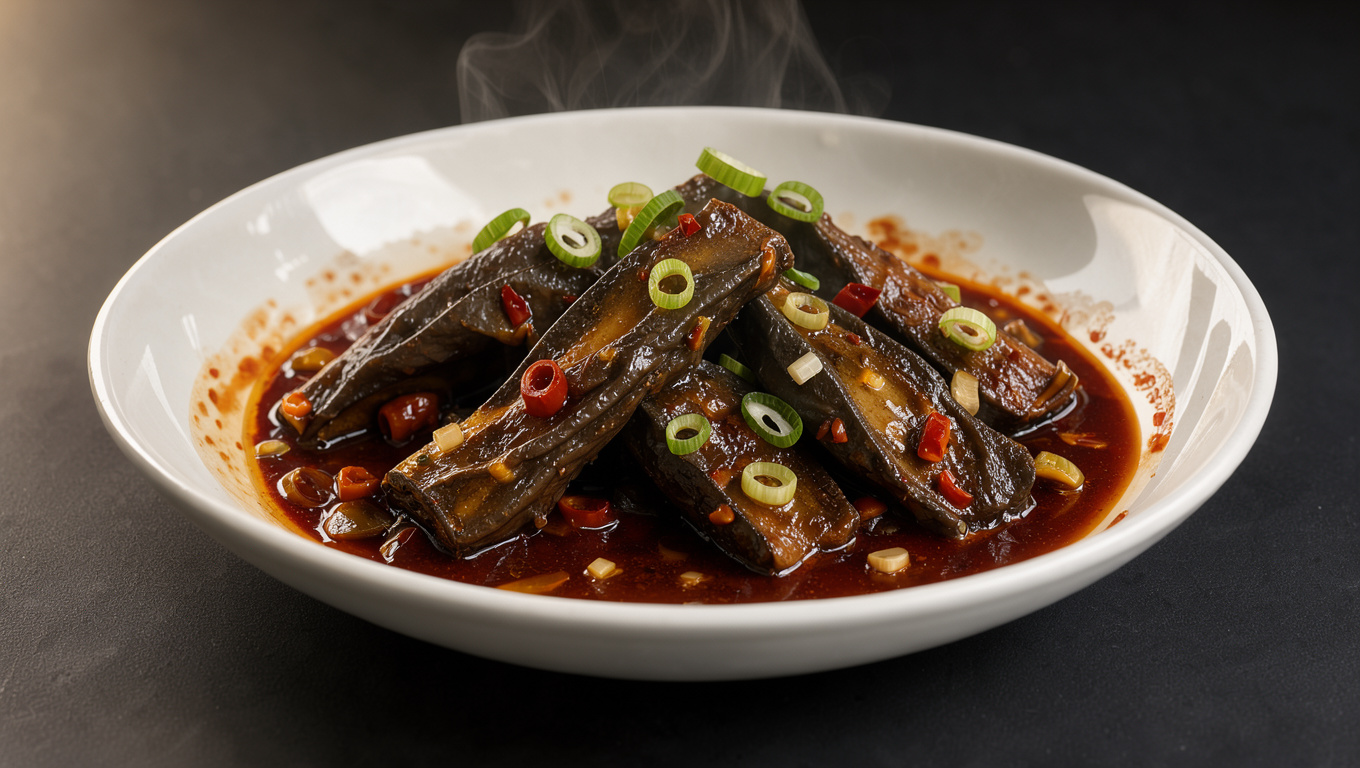 Sichuan Fish-Fragrant AubergineSICHUAN · CHINA — 40 MIN
- CondimentFunkySpicyHerby
A coconut sambol adds fresh heat and funk to a brooding, dark curry.
Try: Pol sambol with grated coconut, lime and chilli
From our kitchen
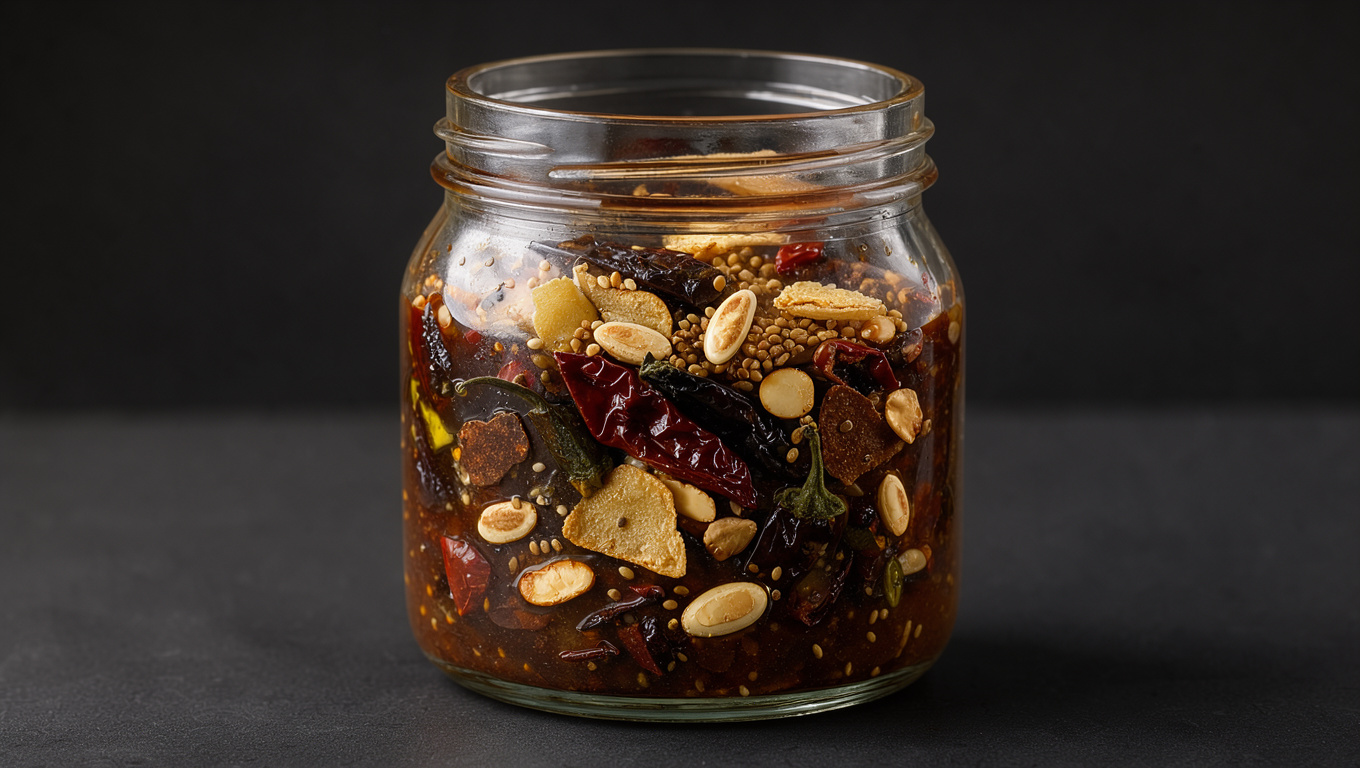 Salsa MachaMEXICAN · MEXICO — 30 MIN